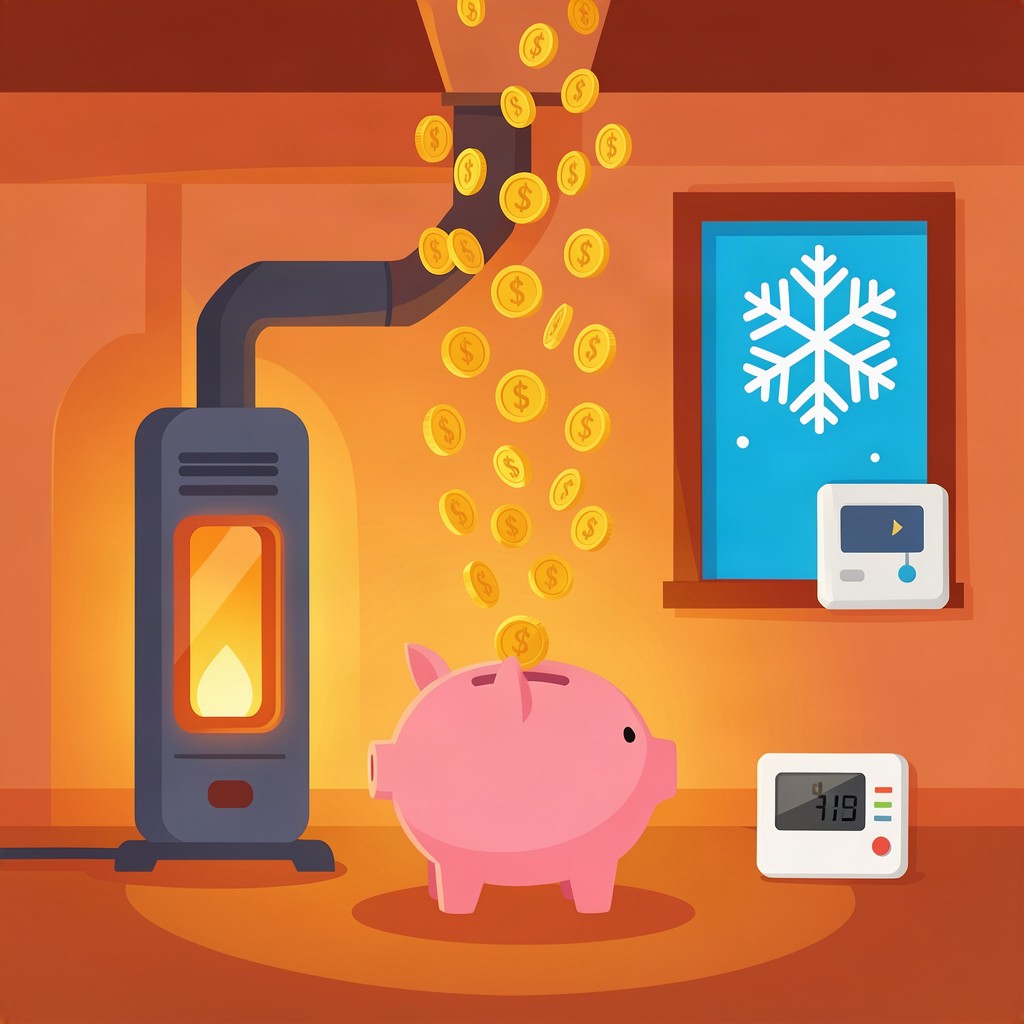
How to Warm Up Your Massive Utah Basement—And Stack \2,450+ in Local Utility Rebates to Pay for It
Utah County homes feature some of the largest unfinished basements in the country, averaging a massive 1,500 square feet of untapped potential 1. While this footprint is incredible for adding bedrooms, accessory dwelling units (ADUs), or home theaters 1, 2, it comes with a major local challenge: our freezing Utah winters.
Because basements sit below grade, they are naturally prone to losing heat rapidly, trapping elevated soil moisture, and lacking proper insulation 3, 4. In fact, untreated below-grade concrete acts as a continuous thermal heat sink, pulling warmth straight out of your home and radiating a deep chill back into your living space 5.
But you don’t have to settle for a cold, damp basement. By choosing the right modern heating systems and strategically stacking local utility rebates with federal tax incentives, you can keep your basement incredibly cozy while leaving thousands of dollars in funding on the table.
The Secret to Warmth: Prepare Your Basement’s "Envelope" First
Before you install a single piece of heating equipment, you must address the physical structure of your basement. No heating system can perform efficiently if it is fighting cold, drafty concrete walls 6, 7.
1. Insulate Thoroughly: Adding rigid foam board or spray foam to reach an R-10 to R-19 insulation value on your exterior walls significantly cuts thermal transfer 8, 9. Additionally, installing a high-quality insulated underlayment under subfloors and laying down thick carpeting dissipates heat slower, stopping warmth from leaching into the concrete slab 8, 9.
2. Seal the Gaps: Heated air will always find the path of least resistance 8. Use caulk and weatherstripping around windows, doors, and sill plates, and apply mastic sealant to metal duct joints to prevent conditioned air from leaking out 8.
The Best Energy-Efficient Basement Heating Systems
Once your basement envelope is sealed, it’s time to select a heating solution. While extending your home’s existing central ductwork is an option, it requires professional calculations to ensure you don’t overload your current furnace 10, 11. Instead, modern projects typically lean toward these two highly efficient alternatives:
1. Ductless Mini-Split Heat Pumps
Ductless mini-splits consist of a quiet outdoor unit connected to a low-profile indoor air handler 12. They provide zoned heating and cooling completely independent of your main HVAC system 12, 13. Because they don't rely on ductwork, they completely eliminate the energy loss associated with standard forced-air systems 14. Many models have SEER ratings over 20 and come with built-in dehumidifiers and freeze-protection modes perfect for basement spaces 9, 14.
2. Dual-Fuel Hybrid Systems (The Ultimate Utah Solution)
A dual-fuel hybrid system pairs an electric air-source heat pump with a backup natural gas furnace 15, 16.
* How it works: During the milder autumn and spring months, the electric heat pump heats your basement with incredible energy efficiency 16. When temperatures plunge below a designated "changeover temperature" (typically between 30°F and 40°F), the system automatically switches to the natural gas furnace to handle the heavy winter load 9, 16, 17.
* The Environmental Benefit: Because heat pumps do not burn fossil fuels on-site, utilizing them on milder winter days directly reduces local emissions and protects valley air quality during Utah’s critical winter inversion seasons 9, 18.
How to Stack \2,450+ in Utah Utility Rebates & Federal Credits
Thanks to a unique partnership in Utah between Rocky Mountain Power (RMP) and Dominion Energy (Enbridge Gas), homeowners can stack multiple rebate programs onto a single dual-fuel installation 15, 19. Here is exactly how the savings pile up:
Step 1: The Utility Combo
* Dominion Energy (ThermWise): Offers a \1,000 rebate (Tier 1) for installing a new ducted heat pump and an ENERGY STAR-certified gas furnace 17, 19.
* Rocky Mountain Power (Wattsmart): Provides a \1,450 rebate for installing the exact same matched equipment 19.
* The Stacked Result: By installing both, you instantly secure \2,450 in direct utility rebates 19. (If you decide to keep your existing qualified furnace and only add a heat pump, you can still stack RMP's \1,450 rebate with a adjusted \700 Dominion rebate for \2,150 in total savings) 20.
Step 2: The Smart Thermostat Bonus
Don't forget the controls. You can stack thermostat rebates from both utilities to knock another \175 off your bill:
* Rocky Mountain Power: Up to a \100 smart thermostat rebate 21.
* Dominion Energy (ThermWise): Up to a \75 smart thermostat rebate 21.
Step 3: Add the Federal Section 25C Tax Credit
Under the Inflation Reduction Act, you can deduct 30% of your gross installation cost (covering both equipment and labor) directly from your federal tax liability—capped at \2,000 per year for qualified heat pumps 22, 23.
* The Stacking Loophole: Crucially, IRS guidelines dictate that utility rebates do not reduce your project cost for tax purposes 24. You claim your 30% tax credit on the gross invoice amount before your utility rebates are deducted, keeping every single dollar of savings in your pocket 24, 25.
Three Costly Mistakes Homeowners Must Avoid
To successfully claim your thousands of dollars in stacked savings, make sure you don't fall into these common administrative traps:
1. Using an Unapproved Contractor: To qualify for Rocky Mountain Power's Wattsmart incentives, the system must be installed by a registered, Wattsmart-participating Trade Ally 26, 27.
2. Missing the 180-Day Deadline: Utah utility applications are incredibly strict 27. You must submit all of your invoices, equipment model numbers, and AHRI certificates within 180 days of completing the installation, or you forfeit the rebates entirely 26, 27.
3. Installing Unmatched Equipment: Do not guess on efficiency. Your system must meet precise SEER2 and HSPF2 ratings and be officially registered with an Air-Conditioning, Heating, and Refrigeration Institute (AHRI) Certificate of Product Ratings to prove the units are properly matched 26, 28, 29.
Ready to Warm Up Your Basement? Let Us Help!
Navigating local building codes, proper heating calculations, and complex utility paperwork can feel overwhelming. That is where we come in.
Our independent, free matching service connects you with pre-vetted, licensed basement finishing professionals throughout Provo, Orem, Lehi, and all of Utah Valley 1. Every contractor in our network is thoroughly screened, fully insured, and highly experienced with local Utah County building codes, permits, and winter construction requirements 1, 30, 31. They will handle the complex AHRI equipment matching and utility applications on your behalf so you don't miss out on a single dollar 26, 32.
👉 Ready to get started? Take our quick, 1-minute interactive quiz "What is Your Basement's True Calling?" right in your Studio panel to discover your ideal basement layout 33! Afterward, you can request free estimates from up to three pre-vetted local pros to start planning your warm, energy-efficient dream basement today 34, 35.
📊 Next Step: If you want to estimate your project's bottom line, I can build an interactive cost and rebate estimator spreadsheet to show you your exact out-of-pocket costs after stacking these utility rebates and tax credits. Would you find that helpful?